
Field journal ·
Can Leatherbacks Hear Offshore Construction? New Research Says Yes — and It Changes How They Forage
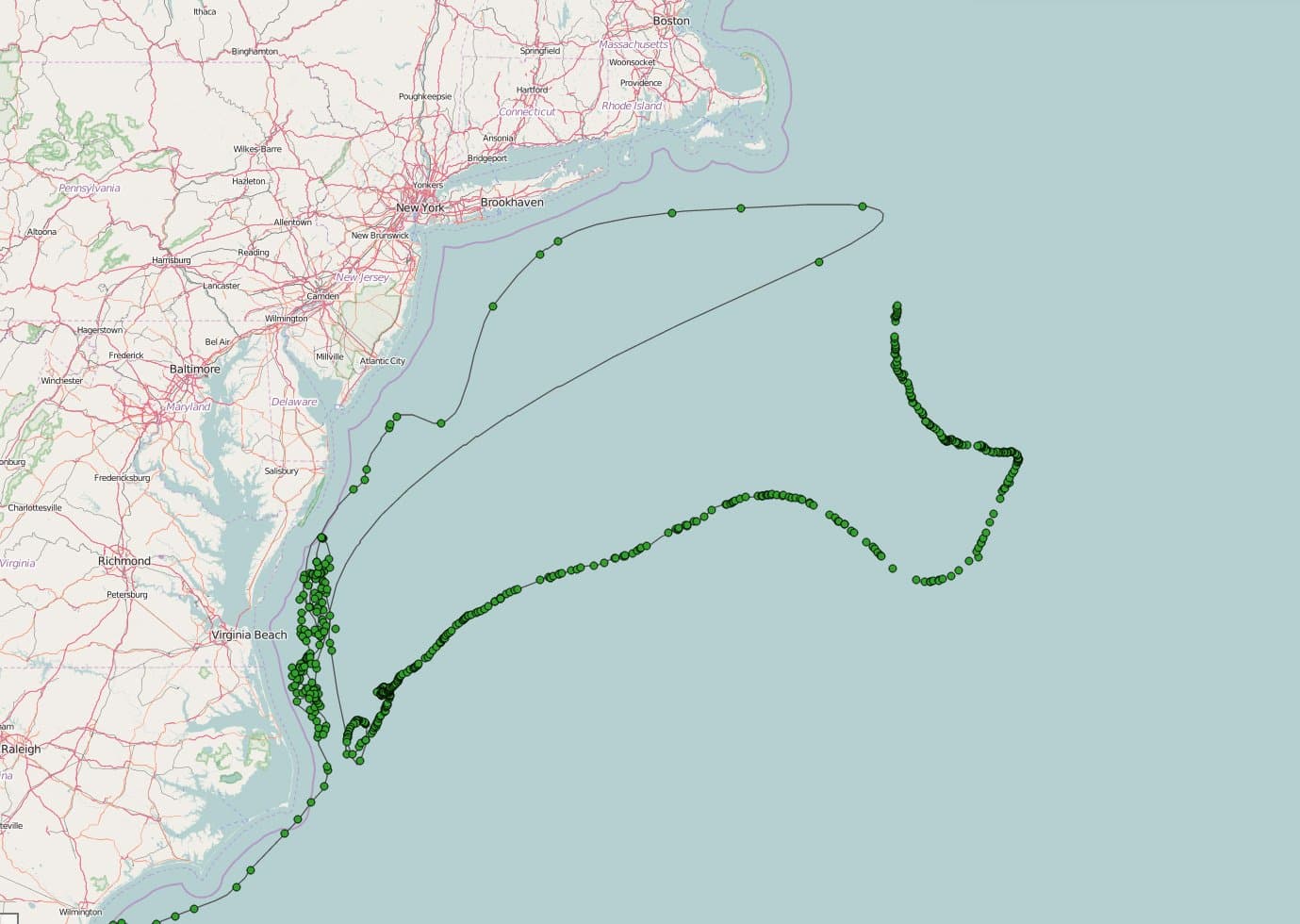
A study published in Scientific Reports this February asked a simple question with big implications: how do leatherback sea turtles respond to the kind of impulsive underwater sounds generated by seismic surveys — the same type of activity that precedes offshore wind farm construction?
Patel et al. tagged 13 leatherbacks at a foraging ground off Massachusetts with data loggers recording video, sound, depth, and location, then exposed them to a controlled seismic sparker. The results were striking. Foraging probability dropped by roughly 64% during sound exposure. Turtles changed their dive patterns, altered their swimming paths, and showed clear behavioral disruption at sound levels well within the range expected from real-world offshore energy development.
This matters for Florida's nesting leatherbacks. After leaving our beaches in June, many of our animals migrate north to feed in exactly these waters — the continental shelf from the Carolinas to New England. If construction-related noise is displacing them from foraging habitat or reducing feeding efficiency during the months they need to rebuild energy reserves for their next nesting season, the consequences could ripple back to reproductive output years later.
The offshore wind buildout along the US Atlantic coast is accelerating. This paper is one of the first to put hard behavioral data behind what was previously just a concern, and it should be required reading for anyone involved in environmental review of these projects.
Patel, S.H. et al. (2026). Leatherback sea turtles (Dermochelys coriacea) react to impulsive sounds. Scientific Reports 16, 7372.